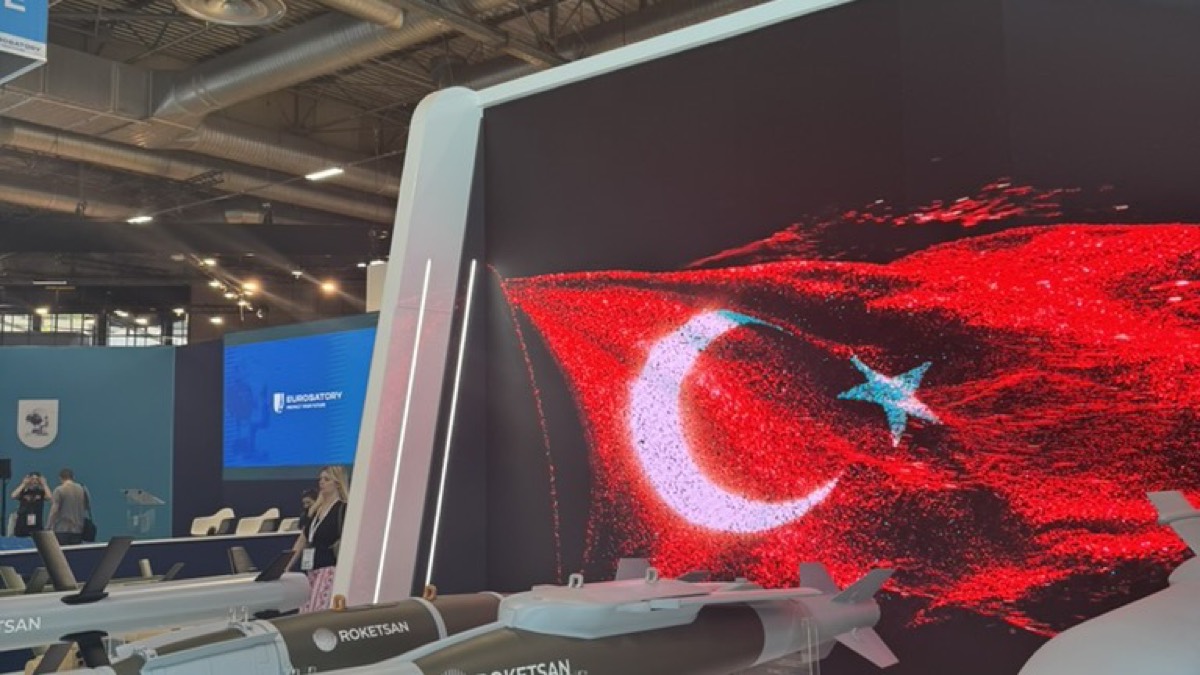
The end-user certificate: the document that decides whether your Turkish order actually ships
A French distributor signs an agreement with a Turkish manufacturer. Prices agreed, volumes locked, delivery schedule set. Then a two-page form shows up. End-user certificate.
He doesn't sign it. He wants it reviewed first. Then he wants to renegotiate the wording. Then he sits on it.
Four months later, the manufacturer has signed with another European importer. Not because the offer was better. Because the file was complete.
We see this play out on repeat. And it almost always rests on the same misunderstanding: treating the certificate as a contract.
It isn't one.
What Turkey asks for, and why
To export defense equipment, ammunition, or anything listed as controlled material, a Turkish manufacturer needs an export authorization. That authorization sits with the Ministry of National Defence. When the product was developed under a contract with the Presidency of Defence Industries and the IP belongs to it, its opinion is sought too.
That authorization isn't granted on the strength of the commercial contract. It's granted on the strength of the destination.
Hence the end-user certificate. The document identifies the buyer, the actual recipient of the equipment, the intended use, and records their written commitment. It's the piece that lets the Turkish administration know where the material is going before it leaves.
No document, no license. No license, no shipment. The certificate isn't one step among others in the file — it's the condition that triggers everything else.
Three misreadings
"Signing commits me to buy"
No. An end-user certificate is not a purchase order. It creates no obligation to buy, sets no minimum volume, ties you to no schedule.
It describes a contemplated import operation and identifies who its final recipient will be. If the deal doesn't happen, the certificate has produced no commercial effect.
You negotiate price in the contract. You certify the destination in the certificate. Two separate documents that don't overlap.
"It's a disguised exclusivity clause"
Not that either. The certificate doesn't stop you working with other suppliers, Turkish or otherwise. It reserves no territory. It grants no distribution right.
An end-user certificate covers one operation and specific reference items. It doesn't organize your commercial relationship with the manufacturer — that's what your distribution agreement is for, and it remains entirely open to negotiation.
"I'll have to expose my business"
The certificate asks for your identity, your address, the nature of the products involved, the final destination, and the intended use. It doesn't ask for your margins, your client list, your total volumes, or your purchase terms with other suppliers.
This is information your freight forwarder, your customs office, and your bank already have.
The one real commitment
There is one, and it needs to be named clearly.
By signing, you commit not to re-transfer the equipment to a third party or to another country without prior authorization. That's the non-retransfer clause, and it's the core of the whole system.
This commitment isn't Turkish. It structures every arms export control regime that exists, from the Arms Trade Treaty to the Wassenaar Arrangement. An American, German, or Italian exporter will ask you for exactly the same thing.
What are you actually being asked for? Not to resell defense equipment to an unauthorized recipient. In other words, to put in writing something you weren't planning to do anyway.
A compliant importer just writes down what they already do.
On the French side: who signs what
When acquiring foreign-made war materiel, the export control authority of the exporting country can require an end-use or end-user certificate, or a final destination certificate. This applies even when the materiel is intended for re-export later, as-is or after integration into another product.
Two things to watch on the signature itself.
First, it's the end user or final recipient of the listed goods who signs. Not the intermediary, not the freight forwarder.
Second, the signatory needs a signature delegation broad enough to bind their company. A file signed by someone whose authority isn't established gets rejected — and the rejection lands at the end of the chain, after weeks of processing.
In parallel, importers of war materiel can request an international import certificate. Its purpose: let the foreign supplier obtain their own authorities' export authorization. Once the equipment arrives, a delivery verification certificate confirms it reached its destination.
Both certificates are issued by the international arms movement authorization office, in Montreuil.
Planning for this piece ahead of time saves you weeks. Discovering it mid-file costs you just as many.
The reframe
The end-user certificate functions as a filter. That's its job, and it's meant to.
For a legitimate importer, it's one signature and one piece of paper in the file. The document confirms what's already true: an identified company, with an address, a declared use, a traceable distribution chain.
For a buyer looking for a workaround channel, it's a wall. There's no final recipient to declare, or none they can declare. They stall, they negotiate the wording, they disappear.
That's exactly the intended result. The system exists so uncontrolled flows stop before departure, not after.
Which produces an effect buyers routinely underestimate: a clean, fast certificate file is a commercial signal.
A Turkish manufacturer who receives a complete, correctly signed certificate within two weeks draws an immediate conclusion. This distributor knows the process. They won't derail the license. You can commit volume to them — and this is exactly the discipline we bring to every plotus firearms program file.
The one who drags it out for three months sends the opposite signal — even if they're fully compliant.
This certificate doesn't slow you down. It sets you apart.
What to remember
- An end-user certificate is not a commercial contract. No purchase commitment, no exclusivity, no exposure of your business.
- One commitment only: no re-transfer without authorization.
- It gates the Turkish export license. Without it, nothing ships.
- The signature must come from the final recipient, with established signing authority.
- Handling it fast positions you better than a month of price negotiation.
FAQ
Does an end-user certificate commit me to buy?
No. It creates no purchase obligation, sets no volume, and imposes no schedule. It identifies the final recipient of a contemplated import operation.
Who has to sign the end-user certificate?
The end user or final recipient of the listed goods. The signatory needs a signature delegation broad enough to bind their company.
Does the certificate create exclusivity with the manufacturer?
No. It covers one operation and specific reference items. Distribution rights are a matter for a separate contract.
What's the one real commitment in the certificate?
Not to re-transfer the equipment to a third party or third country without prior authorization — the non-retransfer clause, common to every international export control regime.
What happens without an end-user certificate?
The export authorization isn't issued by the Turkish authorities, and the equipment can't be shipped.
What is an international import certificate?
A document requested by the French importer that lets the foreign supplier obtain their own export authorization. It's followed, after delivery, by a delivery verification certificate.
Plotus structures the import of Turkish products into the French market across defense, sport shooting, ammunition, and firearms retail. File preparation, direct introductions to manufacturers, execution on the ground.
Fewer slides. More results.
Let's talk about it.
Sources
- Turkish Ministry of National Defence — import/export authorization and end-user certificate procedures: https://www.msb.gov.tr/TeknikHizmetler/icerik/savunma-sanayii-guvenligi-ithalat-ihracat-izni-ve-son-kullanici-belgesi-islemleri
- French Directorate General of Armaments (DGA) — acquisition or transfer of foreign-origin war materiel (end-use, final destination, non-retransfer certificates): https://armement.defense.gouv.fr/international/reglementation-materiels-de-guerre-et-assimiles/acquisition-ou-transfert-de
- Légifrance — French Defence Code, articles R2335-1 et seq. (international import certificate, delivery verification certificate): https://www.legifrance.gouv.fr/codes/section_lc/LEGITEXT000006071307/LEGISCTA000026211242/